ATHENA (Advanced Telescope for High-Energy Astrophysics) is the future European space observation satellite operating in the X-ray domain. It will enable the study of the most extreme phenomena observable in the Universe, such as galaxy clusters and supermassive black holes, with exceptional detail and sensitivity. Designed by the European Space Agency (ESA), the satellite will carry an X-ray detection instrument called X-IFU. The result obtained is even better than that required by the CNES, since the stability measured over more than 10 hours reached a record 0.4 µK.
The teams at
CEA-IRIG/DSBT and CEA-IRFU/DAP worked together to develop temperature measurement electronics compatible with the specific constraints of space. In recent years, DSBT has developed instrumentation that powers the sensor with an extremely low current (only 2 nA) to prevent any parasitic heating due to the Joule effect. In addition, the instrumentation is also equipped with a very low-noise amplification chain designed to guarantee the stability of the temperature sensor measurement at 0.8 µK sensitivity. The electronic board (see figure) was then implemented in a specific cryostat containing several cooling stages developed by the DSBT to reach the very low temperature of 50 mK. The result obtained is even better than that required by the CNES, since the stability measured over more than 10 hours reached a record 0.4 µK.
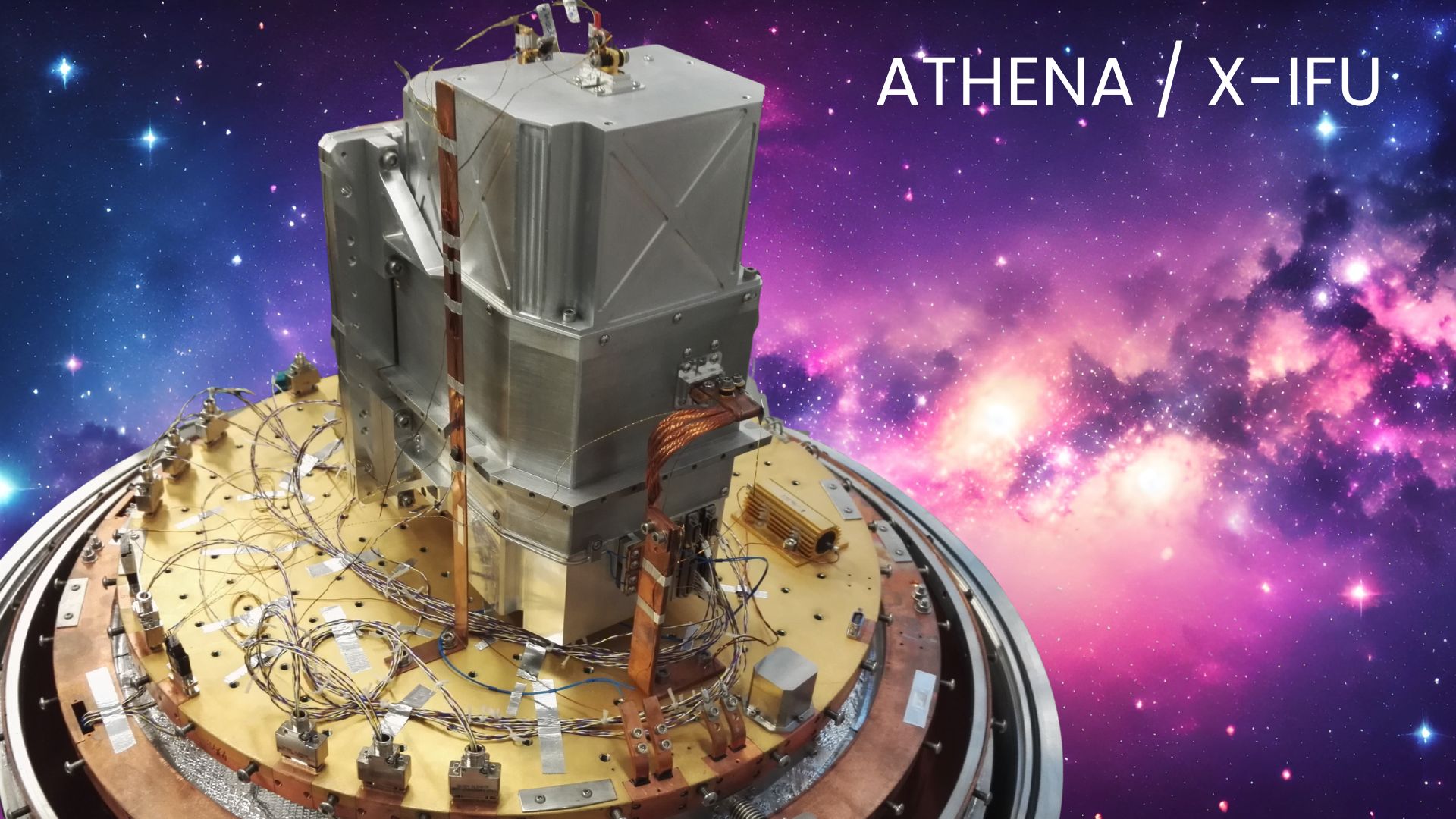
The cryostat dedicated to the X-IFU study. © CEA
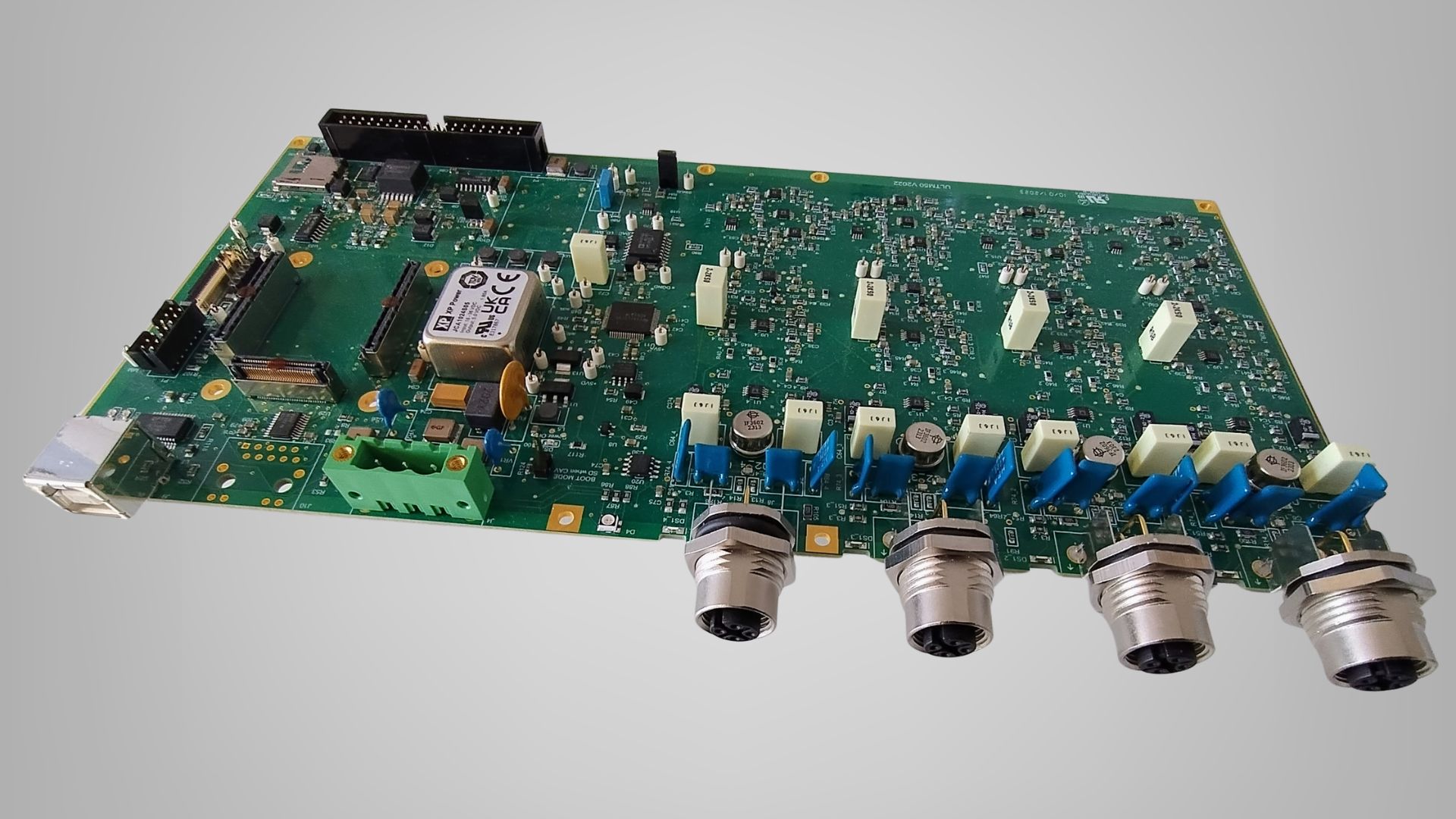
The Very Low Temperature electronic board. © CEA
The electronic board and its control box will soon be delivered to the French National Center for Space Studies (CNES) to characterize the complete system, including the X-IFU instrument. For their part, the CEA-IRFU teams will continue the specific development of the electronics, which will be adapted to withstand the space conditions endured by the ATHENA satellite, and validate their performance on the flight model.
DSBT is a joint research unit (UMR): CEA, UGA
Fundings: CNES
Collaborations: CEA-IRFU/DAP