Geometrical frustration—where the lattice geometry prevents spins from simultaneously satisfying all interactions—is a key source of exotic quantum and classical magnetic states. Geometrically frustrated magnets are also promising materials for magnetocaloric applications as entropy storage refrigerants. While lattices based on triangles and tetrahedra, e.g. kagome and pyrochlore (see
Fig. 1) have been extensively studied, three-dimensional networks of octahedra represent a distinct and poorly-explored class. Such crystal structures are found in antiperovskites, e.g. Eu₃PbO, Mn₃Pt, and certain face-centered cubic alloys.
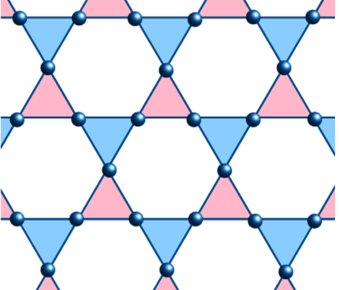
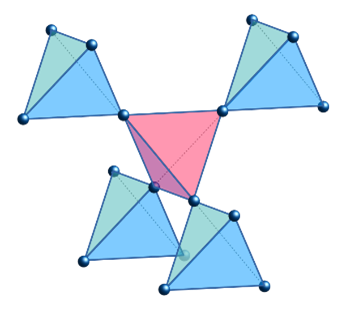
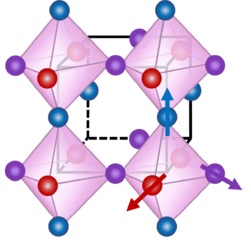
Figure 1: Geometrically frustrated lattices (from left to right): kagome, pyrochlore and octahedral.
The work introduces octahedral antiferromagnets as a new class of geometrically frustrated magnets, distinguished by their crystal lattices composed of octahedra of magnetic ions. Theoretical investigation of the magnetic field (H) –temperature (T) phase diagram in the fully frustrated edge shared octahedral lattice revealed a remarkably rich sequence of eight successive antiferromagnetic phases stabilized by thermal fluctuations (fig.2). This is an interesting example of entropy-driven selection between different types of magnetic order. The complexity of this diagram, with multiple first and second order transitions and the appearance of stable fractional magnetization plateaus at m = 1/3 and 2/3 is truly unique, exceeding complexity of the known phase diagrams of kagome and pyrochlore antiferromagnets.
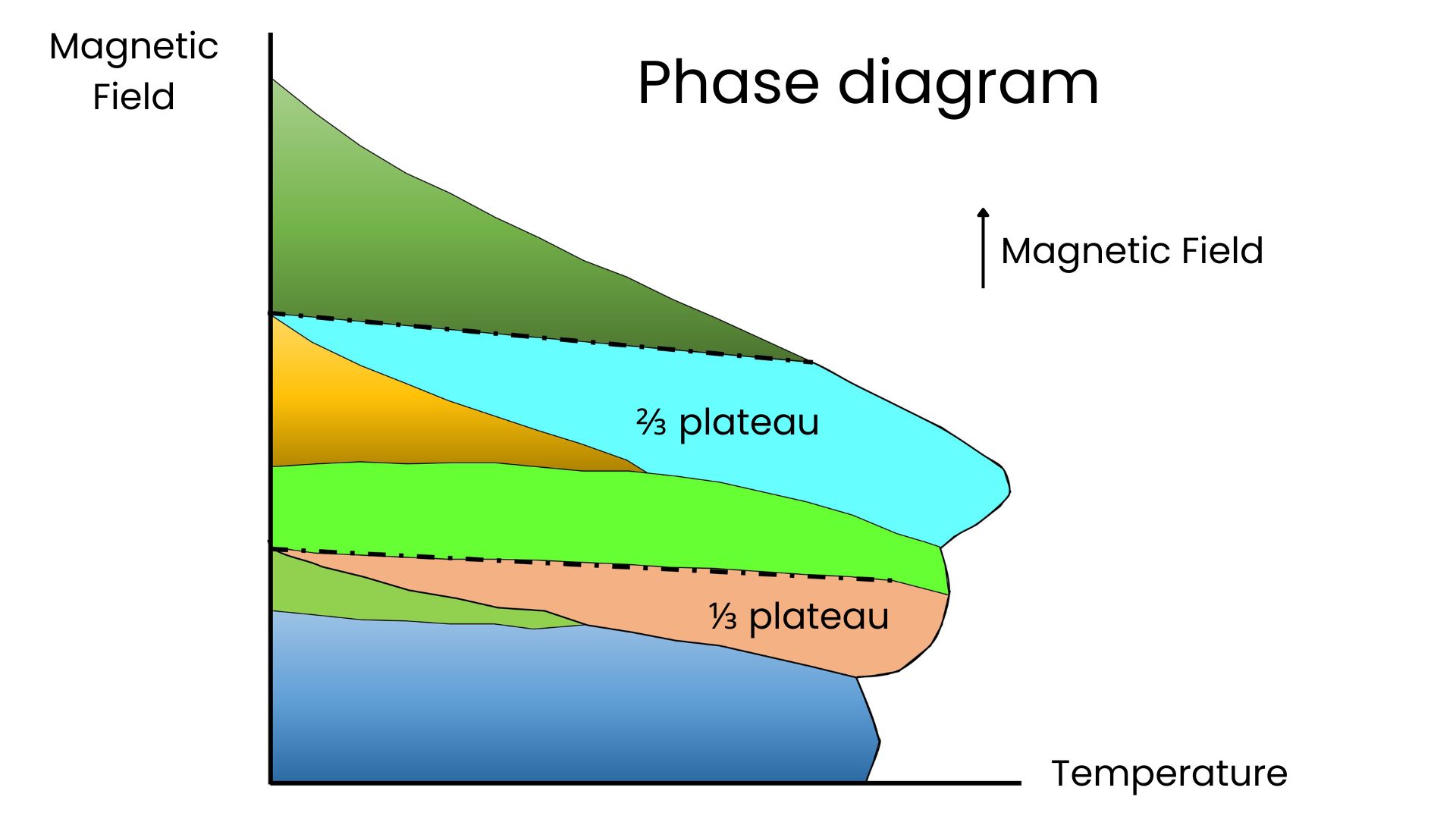
Figure 2: Phase diagram of octahedral antiferromagnet in magnetic field
The richness of the phase diagram originates from the frustrated nature of the spin octahedral building blocks. In a single octahedron, the impossibility to satisfy 12 antiferromagnetic bonds simultaneously leads to a large continuous degeneracy, which by far exceeds the degeneracy of spin triangles or spin tetrahedra. In an applied magnetic field, this degeneracy is partially lifted, resulting in a variety of collinear and coplanar spin arrangements. Examples include the ↑↑↑↑↓↓ magnetic state at the 1/3 plateau or the ↑↑↑↑↑↓ configuration at the 2/3 plateau. Extensive computer simulations using a so-called Monte Carlo method fully validate this picture.
Obtained results establish octahedral antiferromagnets as a distinct new class of geometrically frustrated magnets and a fertile platform for exploring complex magnetism, bridging together material realizations in antiperovskites, e.g. Eu₃PbO, Eu₃SnO, Mn₃Pt(Ge), and theoretical models. It establishes the direct link between the frustration of the six-spin octahedral unit and the emergence of fractional magnetization plateaus.
Furthermore, it demonstrates how the entropic (fluctuation) mechanism can give rise not to just one ordered state but to a variety of phases from a highly degenerate classical ground state. The results bridge the physics of local octahedral units and long-range ordered states in three dimensions, offering new insights into the exploration of exotic states in frustrated magnets and suggests new routes to finding suitable magnetocaloric materials.
PHELIQS is a Joint Research Unit (UMR): CEA – UGA – Grenoble INP
Fundings: ANR Fresco (PI : Daniel Braithwaite, Pheliqs