© CEA-Irig/O. Cavoret
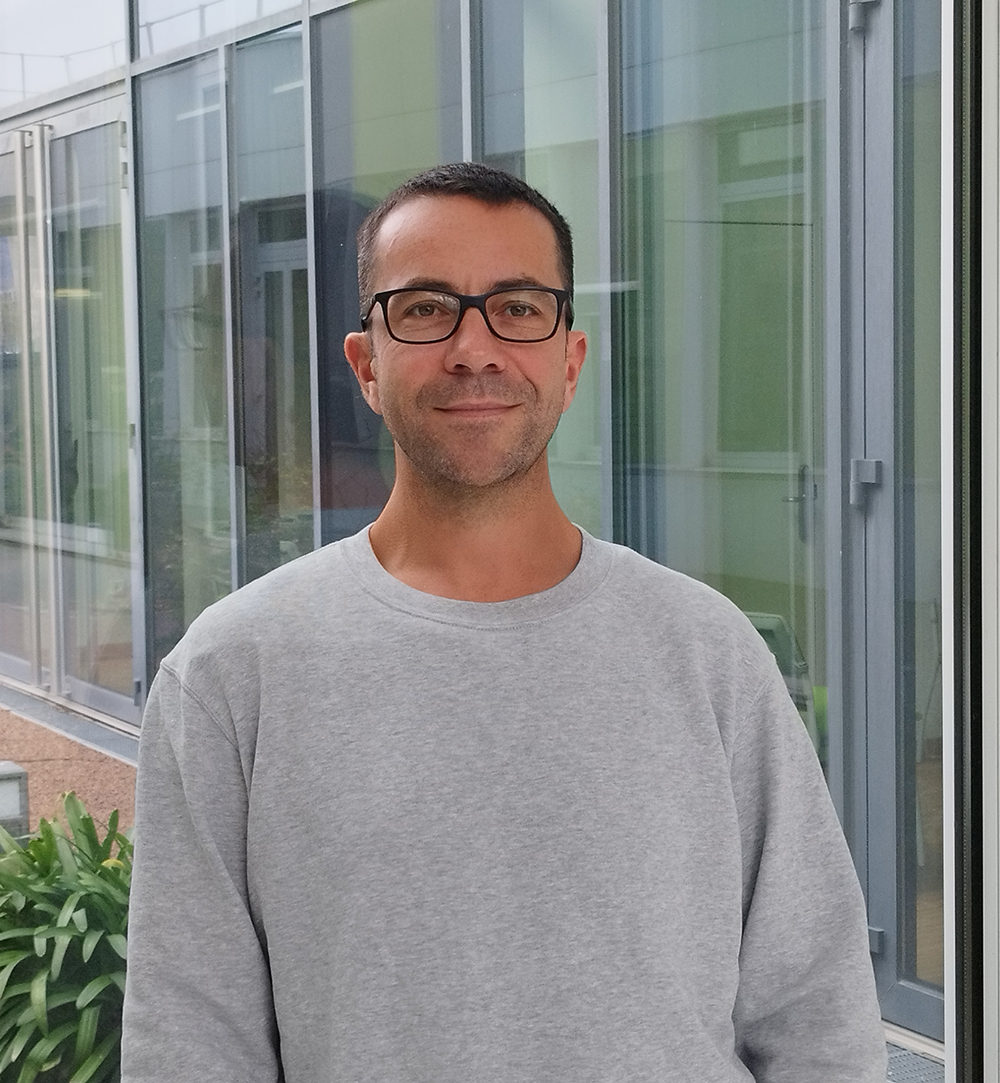
Hugues Nury is a research director at the CNRS, at the Institut de Biologie Structurale in Grenoble. His work focuses on channel receptors, which enable rapid communication between nerve cells and are major drug targets. He combines structural biology, biochemistry, electrophysiology, and simulations to understand how the binding of a molecule alters their function.
After conducting postdoctoral research on a bacterial receptor and the recognition of general anesthetics, he helped determine the first structure of the 5-HT₃ serotonin receptor. His team subsequently characterized several conformations of this receptor and studied the binding and effects of antiemetic drugs and the antidepressant vortioxetine on it. This research highlights the importance of protein dynamics, its membrane environment, and interspecies differences in understanding the effects of a ligand.
Using cryo-electron microscopy on the nicotinic receptor from the torpedo fish—a long-standing model system—he helped reveal an activation intermediate in which the subunits adopt different conformations. These results, obtained through a long-standing collaboration with John Baenziger's team in Ottawa, shed light on the asynchronous transitions that precede channel opening.
His research is now focused on insect receptors. The initial structures of the GABA RDL receptor in bees—the result of Tatiana Labouré's doctoral thesis—have revealed several modulation sites and opened up new pharmacological avenues.
The project associated with the Sicard Prize aims to develop the first insect nicotinic receptor structure. The main strategy will take advantage of cells engineered to produce assembly chaperones with a more precisely controlled expression of the subunits. A complementary approach will explore the purification of native receptors through toxin-mediated capture. Ultimately, this research could guide the design of proteins that selectively target specific insect receptors, with a view toward more selective crop protection.