The scientists directly used a microbial community from a bioreactor to isolate a protein with an intense pink color and crystallized it without oxygen to determine its three-dimensional structure. They found that the protein is a cage, looking like the protein used in our body to store iron, but with a particularity: it contains a heme, a trait typical of bacterioferritin. Unlike traditional bacterioferritins, which assemble into structures of 24 protein copies, this newly discovered protein forms a compact cage of just 12 copies, creating an entirely novel assembly that could be useful for encapsulating other molecules for drug delivery.
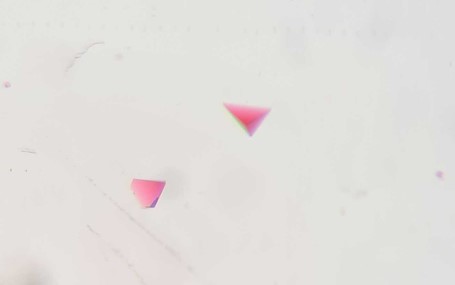
The authors named this protein “mini-bacterioferritin” due to its small size. Genomic analysis revealed that mini-bacterioferritins are not unique to methanotrophs. They are widespread among microbes but have been overlooked until now. This discovery, published in Communications Biology, serves as a reminder of the vast, unexplored potential hidden within microbial communities—and the importance of continuing to mine these biological treasures for scientific and industrial innovation.
Collaboration :
Max Planck Institute for Marine Microbiology, Celsiusstrasse 1, 28359, Bremen, Germany Department of Microbiology, Radboud Institute for Biological and Environmental Sciences, Radboud University, Nijmegen, the Netherlands Univ. Grenoble Alpes, CEA, CNRS, Institut de Biologie Structurale, 38000, Grenoble, France European Synchrotron Radiation Facility, Grenoble, France