SPIN-CHIP aims to deliver major advances in energy efficiency, sensitivity, speed, cost, and performance for a new generation of “Made in Europe” microchips.
To achieve this, the project is based on four complementary technological pillars:
-
Memory : Development of high-density, non-volatile, radiation-resistant magnetic memory for space applications.
-
Computing : Design of stochastic magnetic tunnel junctions for innovative computing architectures, such as stochastic neural accelerators and probabilistic Ising machines, to improve the energy efficiency of edge artificial intelligence applications.
-
Detection : Development of ultra-sensitive magnetic sensors for precision biomedical applications, particularly the monitoring of cardiac activity.
-
RF Signal Processing : Exploring Multifunctional Magnetic Tunnel Junctions for Signal Processing and Secure Communication Applications.
The initial use cases identified involve strategic sectors such as aerospace, health, and safety, with specific performance metrics to assess the impact of the technologies developed.
The project is designed to complement developments under the SPIN-PEPR (SPINtronics Research Program) and embodies an ambitious industrial vision for spintronics, with the participation of several European companies, including
Thales, Infineon Technologies, LIFE_nanoExplore, IC'Alps, VerticalCompute, Cardio-CARE, and Beyond Vision.
SPIN-CHIP represents a total investment of €23.8 million, co-financed by the European Commission (35%), the BPI through the IDEMO Europe program (55%), and co-financing from the PEPR SPIN for the French partners.
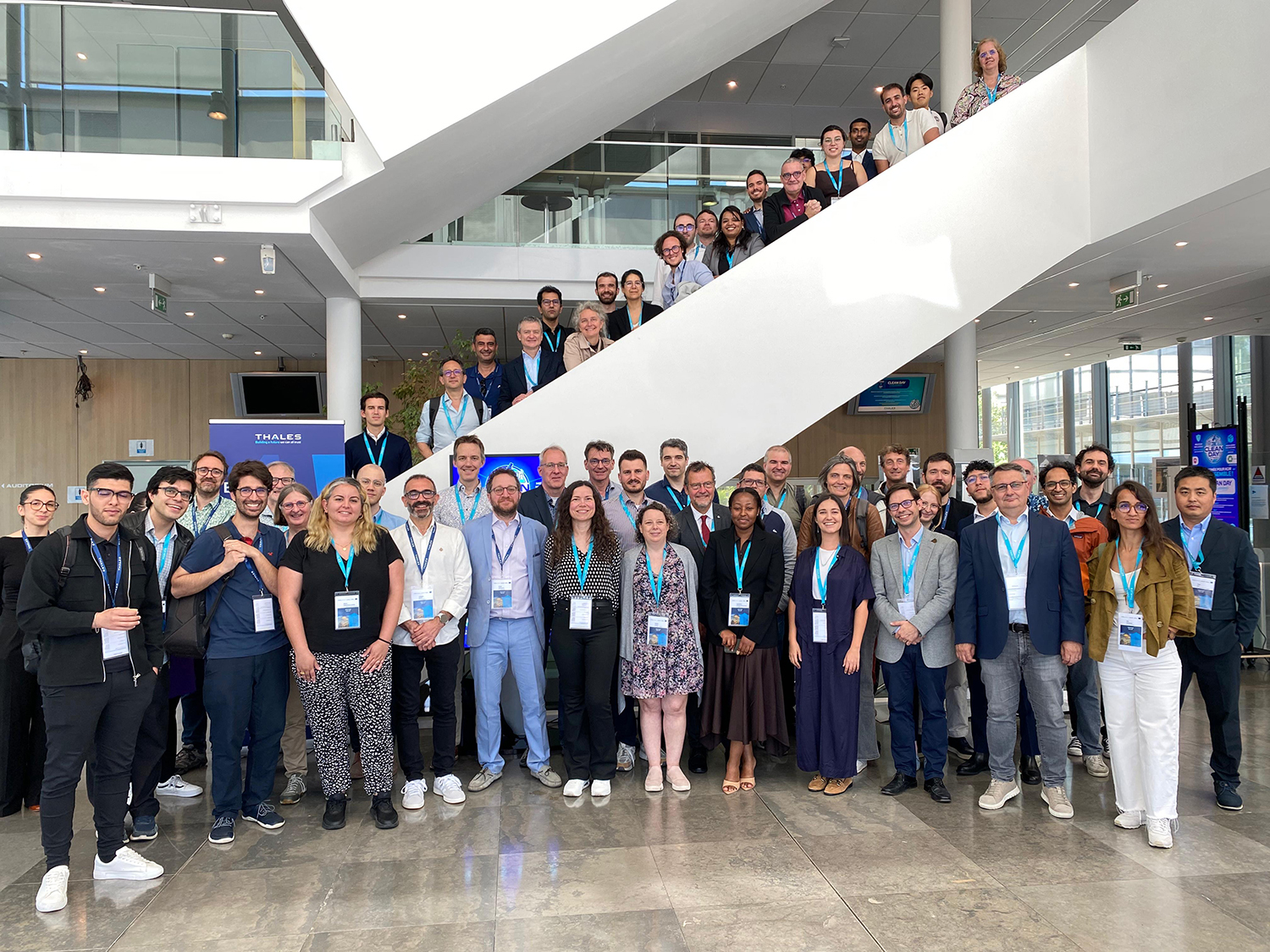
This kick-off meeting marked the start of a European collaboration bringing together academic, industrial, and technological stakeholders to strengthen European leadership in breakthrough technologies for microelectronics and pave the way for future generations of spintronic components.