Alexandra Colin - CEA-Irig/LPCV
Title : Resource sharing in cells: the case of competitive actin structures
Acronym : SHARETHEPOOL
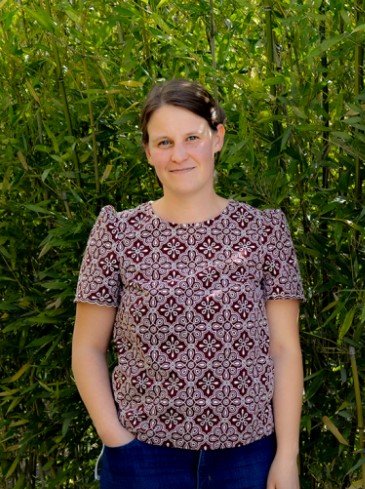
Fascinated by the question: At what point does a system become alive? Alexandra began studying biology with a focus on other sciences, then wavered between biology and chemistry at the ENS Ulm, before deciding to pursue a thesis at the intersection of the two. There, she discovered the cytoskeleton—the network of proteins in the cytoplasm involved in the self-organization of living organisms.
After completing her first postdoctoral fellowship at the Pasteur Institute in Paris, Alexandra joined the Cytomorpholab at CEA-Irig/LPCV (Laboratory of Cell and Plant Physiology) in Grenoble, where she worked on reconstructing the dynamics of actin networks in confined environments. Hired by the CNRS in 2023, she continued her research on this reconstruction, focusing in particular on the mechanisms that allow different structures to coexist when they must share limited resources.
The ERC
SHARETHEPOOL project aims to understand how the cell allocates its resources, particularly how a limited supply of actin is shared to build and maintain multiple dynamic structures. The experimental approach will be based on the complementarity between a biomimetic system and a quantitative cellular system, one of the objectives of which will be to reconstitute dynamic actin structures that share the same resources. A key question will be to test whether these structures can communicate by detecting available resources.
Understanding these mechanisms will shed light on how living organisms efficiently organize complex systems from individual components—a fundamental question that spans from molecular biology to ecosystem dynamics.
Nicola Galvanetto - CEA-Irig/IBS
Title :
Single-molecule dynamics of aggregation at biomolecular condensate interfaces
Acronym : Interfaces
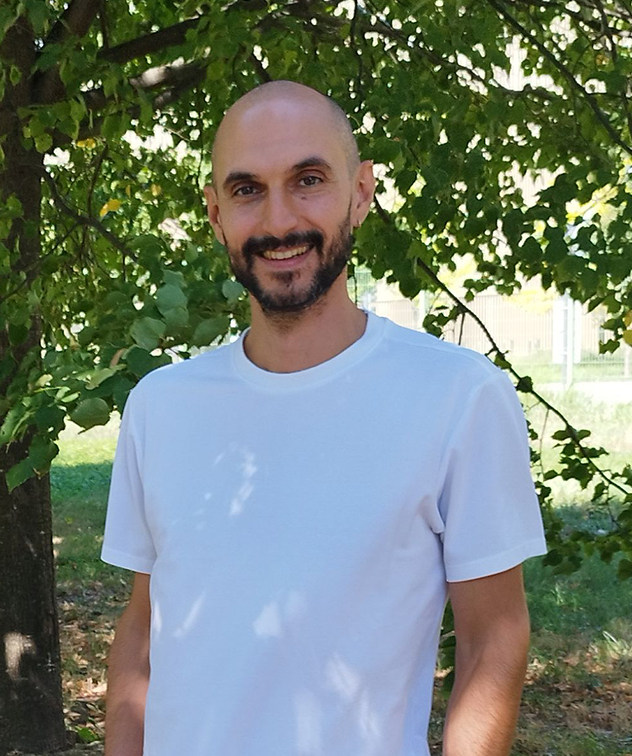 After a Ph.D. in biophysics and neurobiology at the International School for Advanced Studies (SISSA) in Trieste, Nicola Galvanetto joined the University of Zurich as a postdoctoral researcher, where he studied the movements, interactions, and assemblies of disordered proteins to better understand their role in certain pathological processes.
Since March 2026, Nicola has been leading his own team at the Institute of Structural Biology (IBS) in Grenoble, where—thanks to an ATIP-Avenir grant—he is developing a molecular biophysics program at the single-molecule level. He seeks to understand how molecular interactions give rise to the organization and complexity of living systems, and how their disruption can lead to the development of diseases.
The ERC
Interfaces project aims to understand and modulate, at the single-molecule level, the behavior of proteins at the interfaces of biomolecular condensates—membrane-less compartments essential to the spatial and temporal organization of cellular components. In particular, this research could contribute to a better understanding of the protein aggregation mechanisms involved in neurodegenerative diseases and open up new therapeutic avenues. More broadly, it aims to unravel the fundamental principles governing interactions between biomolecules and biological interfaces.