CO₂ TRANSFORMATION : A CHALLENGE FOR CHEMISTS
The chemical conversion of carbon dioxide (CO₂), the main greenhouse gas, into value-added carbon products or synthetic fuels is a major scientific and technological challenge. Meeting this challenge could contribute to the development of a more sustainable, carbon-neutral economy while supporting the energy transition.
One strategy explored by chemists is to draw inspiration from nature, and more specifically from natural metalloenzymes, whose catalytic efficiency relies on precise control of the environment surrounding their active sites. Among these enzymes, carbon monoxide dehydrogenase (CODH) can reversibly catalyze the conversion of CO₂ into CO. For several years, the team led by Philipp Gotico, in collaboration with ICMMO and ISCR, has been developing bio-inspired catalysts based on iron porphyrins functionalized with urea groups (UrFe). These groups form a network of hydrogen-bonding interactions around the active site, promoting the capture and stabilization of CO₂ in the vicinity of the catalytic center. These catalysts have shown particular promise for the electrocatalytic reduction of CO₂ (see Joliot news).
A NEW GENERATION OF CATALYSTS
In this study, carried out as part of the SYNFLUX-LUMICALS project, a Moonshot Project within the Energy & Environment focus area of PEPR LUMA, led by CEA and CNRS, the researchers show that catalytic activity can be substantially enhanced by optimizing the second coordination sphere, i.e. the immediate environment surrounding the catalytic site, which plays a key role in CO₂ capture and activation. Their proof of concept is based on the study of two variants of an iron porphyrin functionalized with urea groups that differ only in their spatial arrangement: a face-to-face configuration (αbαb-UrFe) and an adjacent configuration (α2b2-UrFe) (see figure below).
Switching from the face-to-face to the adjacent geometric configuration profoundly changes the catalyst's interactions with CO₂. The adjacent configuration of the urea arms promotes the electrocatalytic reduction of CO₂ to CO in both aprotic and protic media. The performance is particularly remarkable in protic media, where this catalyst reaches a record reaction rate (turnover frequency, TOF) of 2.7 × 10⁷ s⁻¹, among the highest ever reported for a molecular system. By combining electrochemical measurements, UV–visible and infrared spectroscopy, and theoretical calculations, the researchers demonstrate that this spatial arrangement does more than simply stabilize reaction intermediates: it also enhances access to the active site and facilitates proton transfer, thereby accelerating the catalytic reaction.
This study proposes a new approach to catalyst engineering: optimal catalysis does not necessarily rely on maximizing the stabilization of reaction intermediates. The design of adaptive, directional, and non-covalent networks within the second coordination sphere provides a strategy for achieving the right balance between substrate capture, active-site accessibility, and overall reactivity. The simultaneous improvement in activity and selectivity achieved with this bio-inspired catalyst opens up new perspectives for the design of molecular systems dedicated to CO₂ valorization.
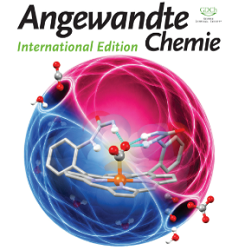 Directional control within the second coordination sphere redefines CO₂ reduction by iron porphyrins. Rearranging urea-derived hydrogen-bond donors modulates reactivity and reveals that optimal catalysis also results from directional and adaptive non-covalent interactions, much like those found in enzymes. Graphical abstract.
© Vishwakarma et al., Angew.Chem.Int.Ed. 2026
Joliot contact : Philipp Gotico (philipp.gotico@cea.fr)
-
Protic solvents (with water, H–O–H, being the most common) contain a hydrogen atom bonded to an electronegative heteroatom (such as O–H) and can readily
donate protons (H⁺), which are used here for CO₂ conversion. In contrast, aprotic solvents do not contain this type of chemical group and cannot donate protons.
ICMMO : Institut de Chimie Moléculaire et des Matériaux d'Orsay
I2BC : Institut de Biologie Intégrative de la Cellule (UMR CEA/CNRS/Université Paris-Saclay)
ISCR : Institut des Sciences Chimiques de Rennes