Releasing the Brakes on Myeloid Immunity
Strategies targeting immune checkpoints aim to remove some of the mechanisms that naturally restrain immune system activation. In the context of HIV, these approaches have so far focused mainly on T cells. The researchers chose to explore a different avenue by targeting LILRB1 and LILRB2, two inhibitory receptors expressed notably on the surface of myeloid cells such as monocytes, macrophages and dendritic cells.
These receptors transmit signals that can limit the activation of these cells and, consequently, their ability to effectively support the antiviral immune response.
Dual Blockade to Stimulate the Immune Response
The researchers developed mac20G10, a monoclonal antibody capable of simultaneously blocking LILRB1 and LILRB2 in cynomolgus macaques. They evaluated it in a preclinical model of SIV infection, a virus closely related to HIV.
Treatment rapidly led to increased activation of several myeloid cell populations, notably characterised by higher expression of CD80, a molecule that plays an important role in T-cell activation. This early alteration of innate immunity was associated, during the chronic phase of infection, with a stronger memory response of SIV-specific CD8+ T cells.
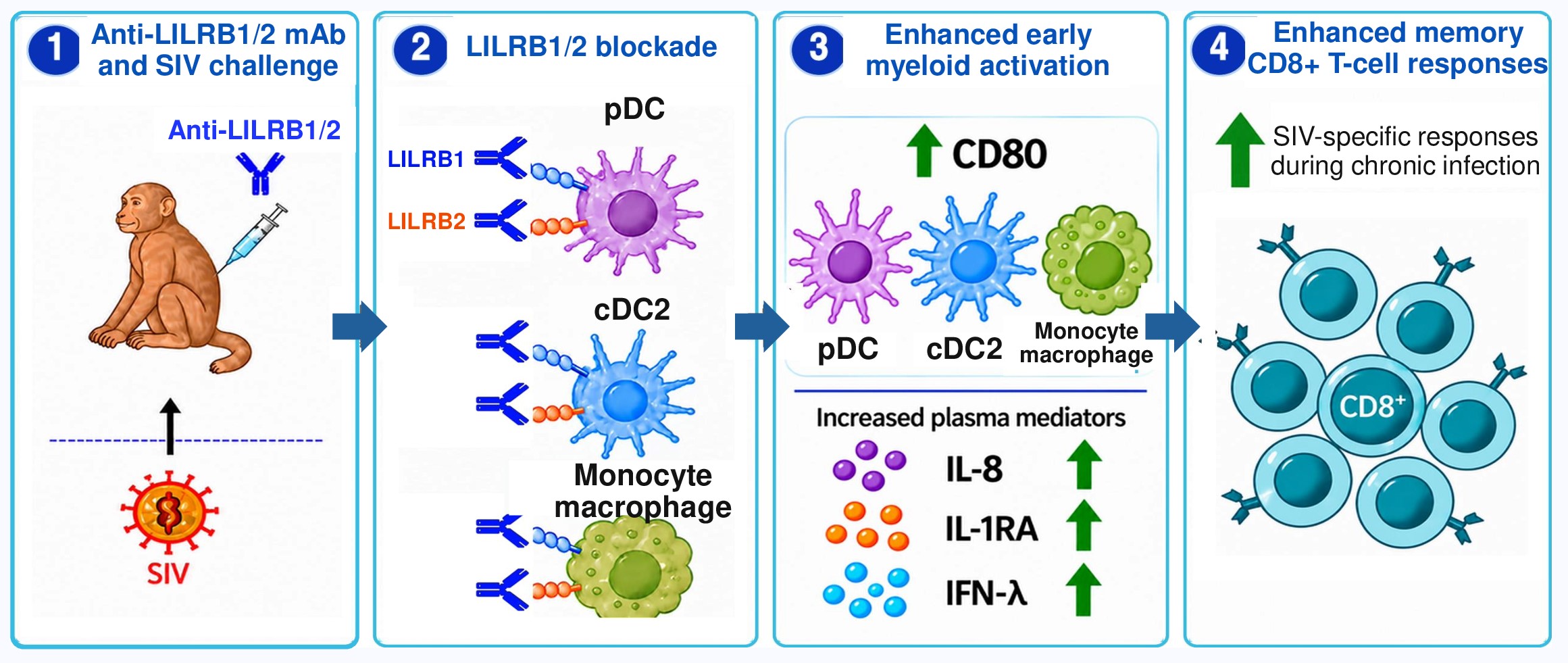
These findings therefore show that acting on myeloid cells from the early stages of infection can durably influence the adaptive immune response directed against the virus.
A New Immunotherapy Strategy to Explore
Despite the enhanced immune responses observed, blockade of LILRB1 and LILRB2 did not reduce viral replication under the conditions of this study. This strategy is therefore not sufficient on its own to control infection.
Nevertheless, it provides proof of concept that myeloid immune checkpoints represent potential targets for modulating the antiviral response. The authors notably propose exploring this approach in combination with other immunotherapeutic strategies and in the context of infection controlled by antiretroviral therapy.
Contact : Benoît Favier