Newborns have an immature immune system, characterized by a response oriented toward tolerance and a limited capacity to generate robust effector responses, making them particularly vulnerable to infections. In this context, maternal immunity plays a central role in ensuring early protection, notably through the transplacental transfer of IgG antibodies and the provision of immune factors through breast milk.
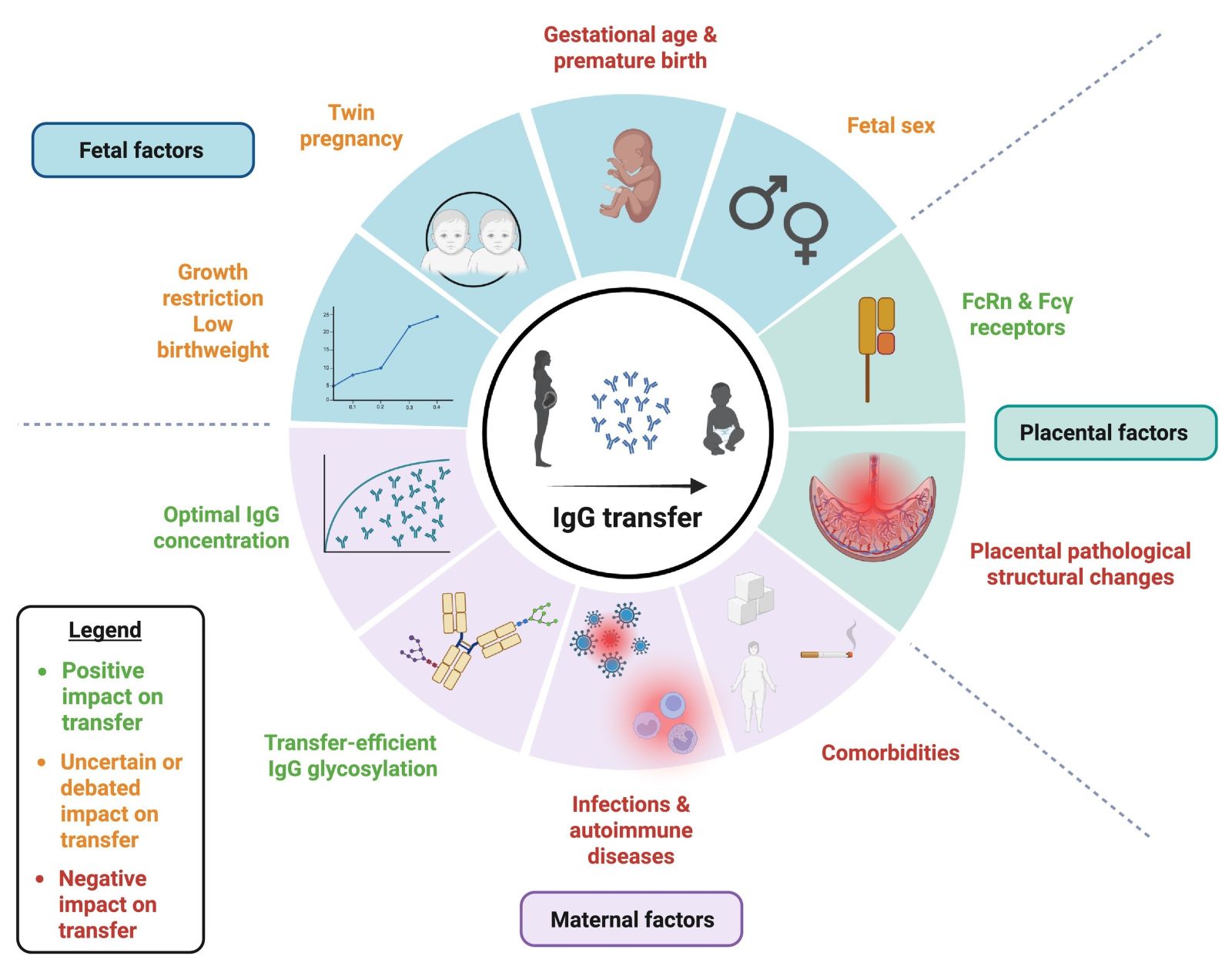
This review describes in detail the mechanisms governing this transfer, in particular the key role of the FcRn receptor in the passage of IgG across the placenta. The efficiency of this transfer depends on numerous maternal, placental and fetal factors, such as placental structure, IgG subclasses, their glycosylation, and certain maternal conditions.
Beyond antibodies, other components of maternal immunity contribute to newborn protection, including maternal microchimerism and the transfer of immune cells and mediators through breast milk, which support the development of the infant’s immune system.
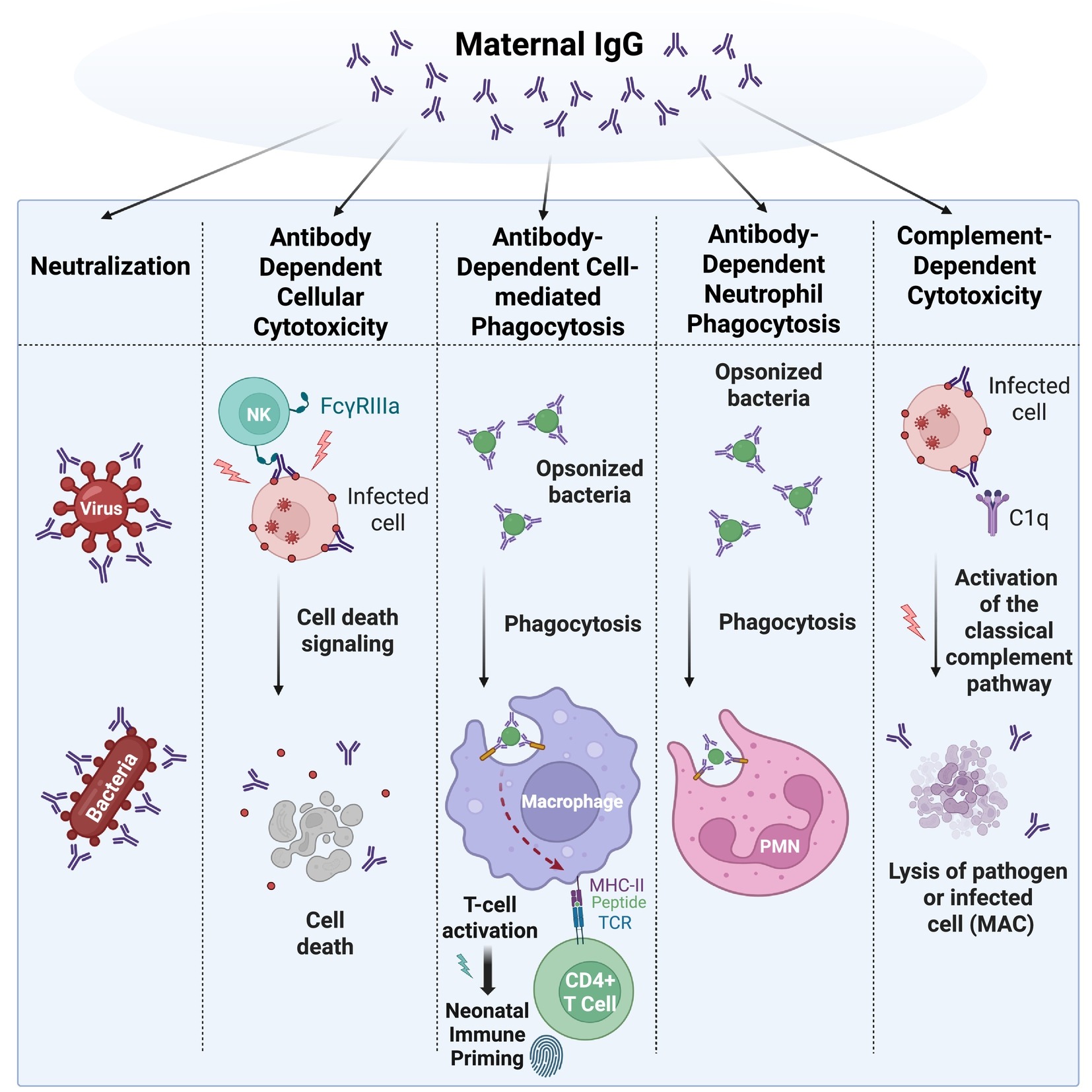
Vaccination during pregnancy is emerging as an effective strategy to strengthen this protection. It increases the transfer of specific antibodies to the fetus and protects both mother and child during the first months of life. Maternal antibodies exert their effects through multiple mechanisms, including pathogen neutralization as well as Fc fragment-dependent effector functions.
However, this strategy has certain limitations: maternal antibodies may temporarily interfere with the infant’s vaccine response, a phenomenon known as the “blunting effect”, without calling into question the overall benefit of maternal vaccination.
Maternal vaccination is therefore now a major public health tool for reducing neonatal morbidity and mortality. Its full potential nevertheless depends on a better understanding of the mechanisms of maternal immunity transfer, their long-term effects on the child’s immunity, and the coordinated optimization of maternal and neonatal vaccination schedules.
Contacts: Vincent Portet Sulla, Nabila Seddiki, Christelle Vauloup-Fellous